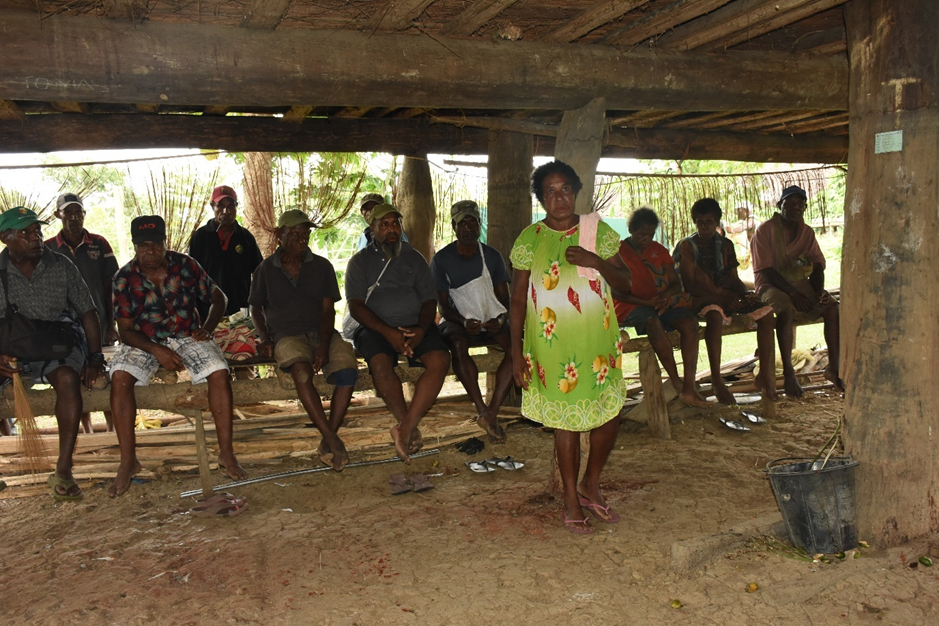
In the riverside village of Timbunke, nestled deep within the East Sepik region of Papua New Guinea, a remarkable gathering unfolded that challenged convention while embracing progress. Held beneath the aged timber beams of a traditional meeting house, the Timbunke Full Assessment Meeting was unlike any that had come before it—not for its agenda, but for its leadership.
What set this meeting apart wasn’t simply the discussion of land boundaries or development plans—it was who was leading the conversation. In a striking departure from cultural tradition, a woman stood at the forefront, not only opening the session but answering the majority of the questions from facilitators and fellow villagers alike. Her presence was not only welcomed—it was commanding.
This is a rare sight in many parts of Papua New Guinea, where village meetings are traditionally led by male elders. However, Timbunke is no ordinary village. A large number of its elders are former public servants, bringing with them years of experience in education, administration, and government service. This has fostered a community dynamic that is more open to inclusive dialogue and alternative leadership roles—especially for women.
The meeting focused on the ongoing assessment of land-use planning, village boundary confirmations, and potential agricultural initiatives. But beyond the topics discussed, the event marked a deeper shift—a cultural inflection point where knowledge, respect, and voice triumphed over gendered expectations.
As elders listened attentively and others engaged in thoughtful exchange, the woman leading the session became a symbol of what rural progress might look like—not the erasure of tradition, but the evolution of it. Her confidence, clarity, and care demonstrated not only competence, but community trust—a trust that transcended convention.
Borderlands Green Ltd is proud to witness and support this transformation. The Timbunke Full Assessment Meeting serves as a reminder that meaningful development begins with local empowerment—and that when tradition opens its doors to inclusion, entire communities stand to benefit.
Leave a Reply