
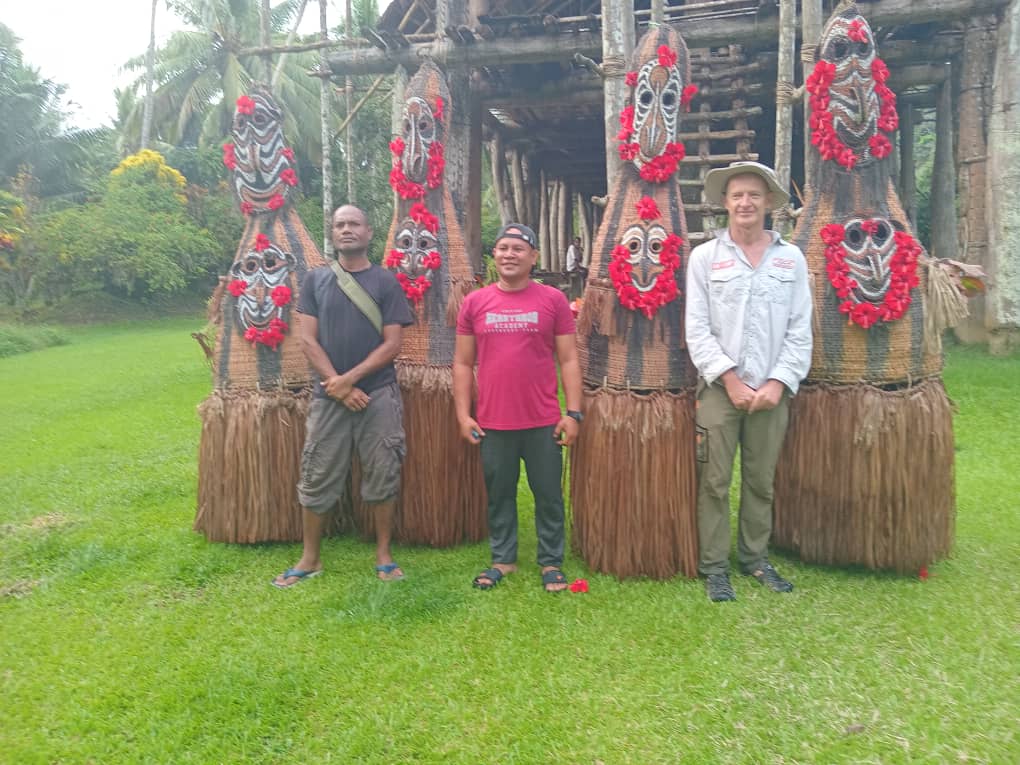
As part of our continued efforts to build respectful, lasting relationships with Indigenous Landowner Groups (ILGs), the Borderlands Green Ltd team recently visited a traditional Spirit House in East Sepik, Papua New Guinea. The experience served not only as a cultural exchange, but also as a powerful reminder of the deep connection between land, heritage, and community stewardship.
Cultural Traditions in Focus
During the visit, our team was welcomed by local elders and guardians of the spirit house. We witnessed customary dance rituals featuring iconic spirit masks—handcrafted symbols that carry ancestral stories, environmental wisdom, and sacred clan identities. These powerful performances are rooted in centuries of tradition and passed down through generations.
Artistry and Identity
We also had the opportunity to explore a stunning display of hand-carved wooden masks. Each one represents unique cosmologies, animals, and tribal spirits. For the Borderlands team, this was a chance to further understand the cultural values that shape local perspectives on land, nature, and governance.

Why This Matters to Borderlands
Our work in sustainable development and ecological planning cannot succeed without honoring the cultural and spiritual landscapes that define Papua New Guinea’s communities. By engaging meaningfully with local traditions, we strengthen mutual trust and ensure our land-use strategies reflect local priorities and heritage.
Leave a Reply